The Breakdown
Zelora · Gary
Zelora gave its after-sales support a face, instead of a promise in the small print
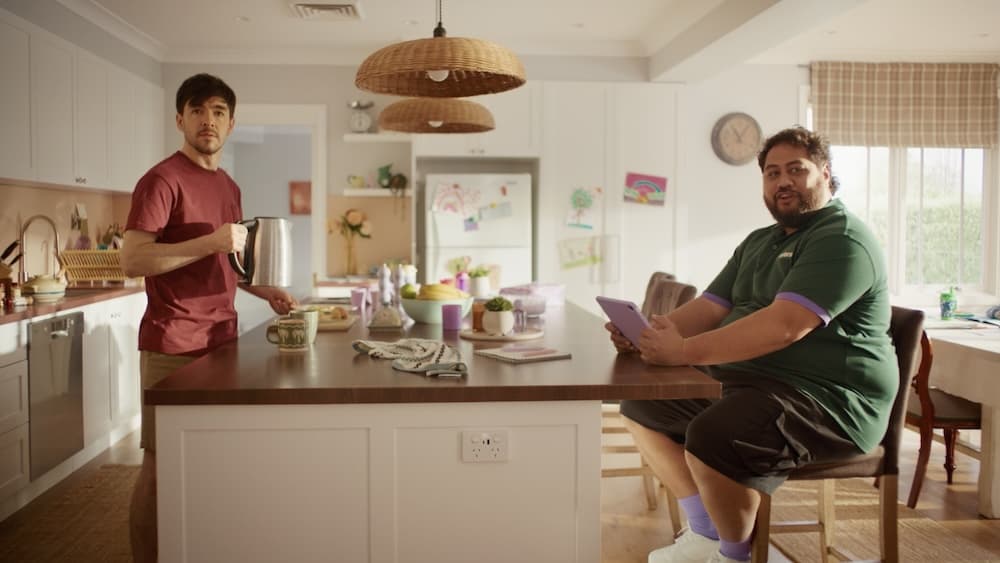
Solar and battery companies live or die on a doubt most ads never address: who actually helps you once the panels are up? Zelora's answer is a single recurring character, Gary.
The TL;DR (too long; didn't read)
- Zelora's first brand campaign follows 'Gary', a character played by actor Michael Logo, from a customer's first phone call through installation day to years of ongoing support.
- The campaign, via Howatson+Company, runs across BVOD, SVOD, YouTube, Meta, out-of-home, digital display, in-store at Bunnings and Zelora's own website.
- No performance figures have been reported yet; this is a newly launched hero film and integrated campaign, not a measured result.
01
Naming the doubt instead of dodging it
Most solar ads sell the saving on your power bill. Zelora's campaign instead names the quieter worry that stops people buying: once it's installed, who's actually there if something goes wrong?
By making that worry the whole subject of the film, rather than an afterthought in the small print, the brand treats ongoing support as a feature worth advertising, not just a customer-service line item.
02
A person is easier to remember than a promise
'We offer ongoing support' is forgettable because every competitor can say the same sentence. A specific character, played by a specific actor, moving through a specific story (call, installation day, years later) gives the audience something concrete to picture and recall.
This only works if Gary reappears consistently across future Zelora ads; a one-off character isn't a distinctive asset yet, just a single campaign's device.
03
Spending media money on the full journey, not just launch week
Running across BVOD, SVOD, YouTube, Meta, out-of-home, digital display and in-store at Bunnings puts Gary in front of people both during active research (online video, search-adjacent retail) and passive attention (out-of-home), which matters for a considered purchase like solar.
There's no reported data yet on recall, leads or installs linked to the campaign, so its actual effect on sales is still unknown.
Read the original reporting
- Zelora introduces Gary, the solar and battery support that sticks around via Howatson+Co ↗
Campaign Brief · 16 Oct 2026
- Zelora Introduces 'Gary' To Educate Aussies About Solar & Battery Via Howatson+Company ↗
B&T · 16 Oct 2026
The theory bit
The academic ideas that explain what's going on, with the full reference for your assignments.
Distinctive brand assets
Colours, characters, shapes and sounds that people link to only your brand. They help ads get correctly attributed, so the brand (not the category) gets the credit.
Here: A consistently reused character like Gary has the potential to become a distinctive brand asset, something only Zelora owns, but only if it's repeated across future campaigns rather than used once.
Romaniuk, J. (2018). Building Distinctive Brand Assets. Oxford University Press.
Parasocial interaction
Audiences form one-sided ‘relationships’ with media figures they see regularly. This is the basis of creator and founder-led influence.
Here: Following one character through an ongoing relationship (call, installation, years of help) invites the audience into a one-sided relationship with him, the same mechanism that makes recurring brand mascots and spokespeople stick in memory.
Horton, D. & Wohl, R. R. (1956). Mass communication and para-social interaction. Psychiatry, 19(3).
Mere exposure effect
Repeated exposure to something tends to increase how much we like it.
Here: Repeated exposure to the same character across many channels is likely to make Gary, and by extension Zelora, more liked over time, independent of any single ad's content.
Zajonc, R. B. (1968). Attitudinal effects of mere exposure. Journal of Personality and Social Psychology, 9(2).
Over to you
No right answers here. These are to get you thinking. Jot your ideas down or chat them through.
- 1
Why might naming an unspoken customer doubt be more persuasive than only talking about savings?
Need a nudge?
Think about what's actually stopping a hesitant buyer from purchasing.
- 2
What has to happen for Gary to become a genuine distinctive asset rather than a one-off campaign device?
Need a nudge?
Consider consistency over time, not just one campaign.
- 3
What would you want to see before judging whether this campaign actually built more trust in Zelora's support?
Need a nudge?
Separate 'the ad looks good' from 'it changed behaviour or belief'.
Optional · about 10 minutes
Your mini task
In 60–120 words: pick a brand in a category where after-sales support is a common doubt (e.g. appliances, insurance, trades), and design a single recurring character who could represent that ongoing support across future campaigns. Describe who they are, one scene showing them in action, and where you'd first introduce them.