The Breakdown
Lovehoney · DND (Down N Dirty) getaways
Lovehoney will only give you a bigger discount if you actually put your phone down
Plenty of brands tell couples to 'unplug and reconnect'. Lovehoney's cabin getaways instead measure it: screenshot your screen time on arrival and departure, and the bigger the drop, the bigger the discount.
The TL;DR (too long; didn't read)
- Lovehoney's 'DND' getaways, with Into The Wild Escapes, are off-grid cabin stays where couples who halve their phone screen time during the stay get it for free.
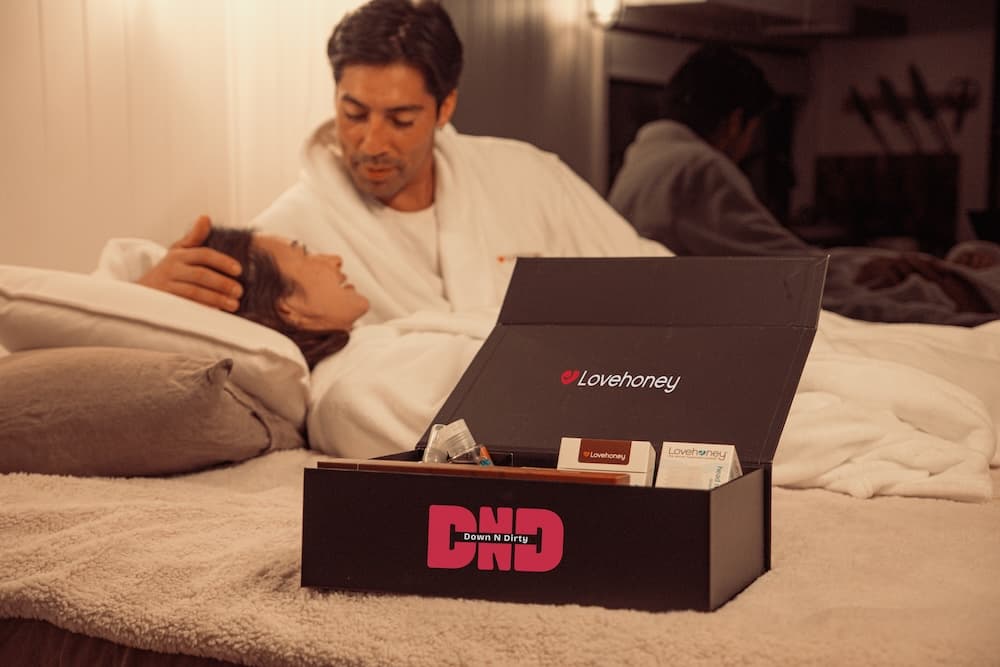
- Each cabin swaps phones for a disposable camera and a journal, and every stay includes a Lovehoney 'Reconnect Kit' the brand values at over $250.
- Lovehoney cites its own research that Australians give their screens '12 times more attention' than their partner, a brand-reported figure, and no booking or screen-time results have been published yet.
01
Making the incentive match the behaviour
Most 'digital detox' marketing is just a theme on top of a normal hotel stay. Here the discount is mechanically tied to the exact behaviour the brand wants (less scrolling), measured with a screenshot before and after, so the offer only pays out if people genuinely do the thing.
That's a tighter loop than a general wellness message: it removes.room for a guest to pay lip service to 'disconnecting' while scrolling the whole time anyway.
02
Removing the easy alternative, not just discouraging it
Swapping phones for a disposable camera and a journal doesn't just ask people to resist their phone; it gives them something else to physically hold and use instead. That lowers the effort needed to behave differently, rather than relying on willpower alone.
Pairing the mechanic with a product kit (the Reconnect Kit) also keeps the stay tied back to what Lovehoney actually sells, rather than becoming a generic travel promotion with the brand's name attached.
03
Reading the brand's own number carefully
The claim that Australians give screens '12 times more attention' than their partner comes from Lovehoney's own research, not an independent study, so it should be read as a brand's framing of the problem it's selling a solution to.
The offer has only just launched, so there's no data yet on how many couples booked, how many hit the 50% reduction, or whether the mechanic changed habits after the stay ended.
Read the original reporting
- Lovehoney's 'DND' getaways reward couples for scrolling less in new campaign via CampaignLab ↗
Campaign Brief · 16 Oct 2026
The theory bit
The academic ideas that explain what's going on, with the full reference for your assignments.
Fogg Behaviour Model (B = MAP)
A behaviour happens when Motivation, Ability and a Prompt come together. Making an action easier is often more effective than adding motivation.
Here: Tying a reward to a measured drop in screen time is a direct application of the Fogg model: it supplies a clear prompt (book the stay) and increases ability (swap the phone for a camera and journal) rather than just adding motivation through a slogan.
Fogg, B. J. (2009). A Behavior Model for Persuasive Design. Proceedings of Persuasive '09.
Gamification
Using game design elements (points, progress, competition) in non-game contexts to motivate behaviour.
Here: Turning screen-time reduction into a scored, rewarded challenge, the bigger the drop, the bigger the discount, borrows a game mechanic (progress tied to a prize) to drive a real-world behaviour.
Deterding, S., Dixon, D., Khaled, R. & Nacke, L. (2011). From Game Design Elements to Gamefulness. Proceedings of MindTrek '11.
The experience economy
As products become commodities, value shifts to memorable experiences. Staged, immersive experiences create stronger memories and willingness to pay.
Here: An off-grid cabin stay with a camera and journal in place of a phone is a staged experience designed to be memorable in itself, not just a backdrop for a product message.
Pine, B. J. & Gilmore, J. H. (1998). Welcome to the Experience Economy. Harvard Business Review, 76(4).
Over to you
No right answers here. These are to get you thinking. Jot your ideas down or chat them through.
- 1
Why might measuring the behaviour (screenshotting screen time) work better than just asking people to 'disconnect'?
Need a nudge?
Think about the difference between an instruction and an incentive tied to proof.
- 2
What is the disposable camera and journal actually doing, beyond fitting the theme?
Need a nudge?
Consider what replaces the phone in someone's hands, not just what's removed.
- 3
How should the '12 times more attention' statistic change how much weight you put on it?
Need a nudge?
Think about who produced the research and what it's being used to sell.
Optional · about 10 minutes
Your mini task
In 60–120 words: design a reward mechanic for a brand of your choice that only pays out when a customer provably does a specific, healthy behaviour (not just claims to). Name the behaviour, how it's measured or proven, and the reward.