The Breakdown
Powerade · Never Just Sports
Powerade answered a rival's controversial ad with real athletes, not a statement
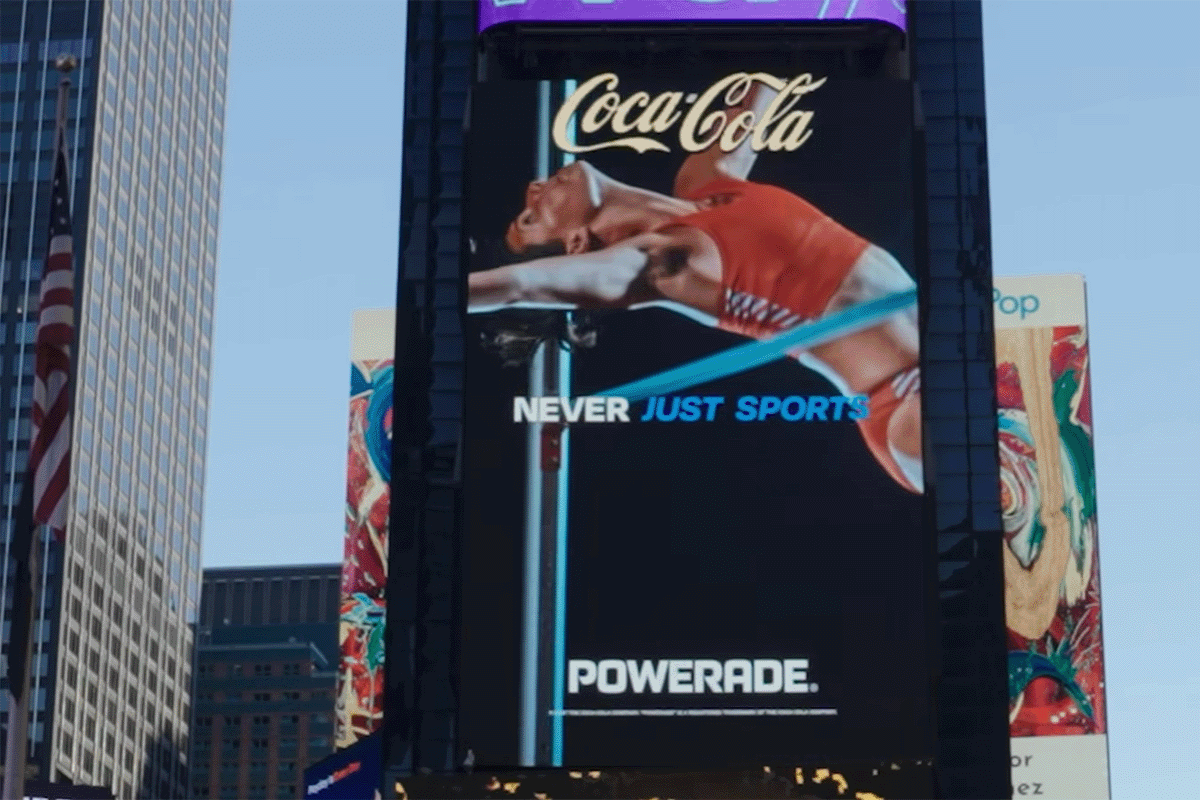
When Novig's Sydney Sweeney ad drew backlash for how it portrayed women in sport, Powerade didn't issue a press release. It bought a weekend in Times Square and ran footage of real women athletes instead.
The TL;DR (too long; didn't read)
- Novig, a US sports trading platform, launched a campaign in early September using provocative imagery of actor Sydney Sweeney, which drew backlash over how it portrayed women in sport.
- Powerade responded with 'Never Just Sports' via Ogilvy: footage of real women athletes completing genuine sporting feats, screened on a Times Square billboard over a weekend.
- No reach or impact figures have been published for Powerade's response; the article separately reports a self-reported growth figure for Novig's own platform, not for this ad.
01
Replying without naming the rival
Powerade's ad doesn't need to mention Novig directly. The timing and the subject (real women doing real sport) does the work of positioning it as a direct answer to a controversy everyone in the conversation already recognised.
That lets Powerade take a side without picking a public fight, which carries less risk than a direct call-out.
02
Showing up where the argument was happening
Times Square is one of the most visible, most photographed ad locations anywhere, and running there for a weekend put the response in the same physical and cultural spotlight the original controversy was getting.
A short, highly visible burst like this trades reach over time for maximum visibility at the exact moment people were paying attention.
03
One weekend, no numbers yet
Because the placement ran for a single weekend in one location, there's no reported measure of how many people actually saw it or how it changed opinions.
The only number in the coverage belongs to Novig, not Powerade: a self-reported rise in its own first-time depositors. That's a claim about the rival's business, not a result for Powerade's response.
Read the original reporting
- Powerade Hits Back At Novig’s Sydney Sweeney Ad ↗
B&T · 13 Oct 2026
The theory bit
The academic ideas that explain what's going on, with the full reference for your assignments.
STEPPS: why things catch on
Six drivers of sharing: Social currency, Triggers, Emotion, Public, Practical value and Stories. Content that makes people look good or is highly visible spreads further.
Here: Running in Times Square during an active controversy is highly Public and well-Timed, which Berger's STEPPS framework suggests makes a response more likely to be noticed and talked about.
Berger, J. (2013). Contagious: Why Things Catch On. Simon & Schuster.
Customer-based brand equity
A brand's value lives in what customers know about it: how aware they are and how strong, favourable and unique their brand associations are.
Here: The ad builds the association 'Powerade backs real women in sport', a favourable contrast drawn without attacking the rival directly.
Keller, K. L. (1993). Conceptualizing, measuring, and managing customer-based brand equity. Journal of Marketing, 57(1).
Over to you
No right answers here. These are to get you thinking. Jot your ideas down or chat them through.
- 1
Why might responding without naming Novig directly be a safer move than a direct call-out?
Need a nudge?
Think about what a direct public fight could cost a brand if it goes wrong.
- 2
What does running in Times Square add beyond the number of people who might walk past it?
Need a nudge?
Consider the cultural visibility of the location itself, not just foot traffic.
- 3
Why doesn't Novig's self-reported growth figure tell us anything about whether Powerade's response worked?
Need a nudge?
Think about which brand that number actually describes.
Optional · about 10 minutes
Your mini task
In 60–120 words: pick a real or plausible controversial ad from a brand, and design a response ad for a different brand in an unrelated category that takes the opposite position without naming the original brand. Name the location or channel, and what specific contrast you want the audience to notice.