The Breakdown
-196 · Tokyo konbini nightclub takeover
How a vodka brand turned a queue into a media plan
-196 took over a Sydney nightclub for one night and turned it into a Japanese convenience store. 5,000 people wanted in, and only 750 got tickets. Here's why that gap is the whole point.
The TL;DR (too long; didn't read)
- One night, one very photographable idea: a club that looks like a shop.
- Free but limited tickets created demand far bigger than the room (5,000 registrations for 750 spots, as reported).
- The event was built to be filmed, so attendees made the content.
01
The set is the strategy
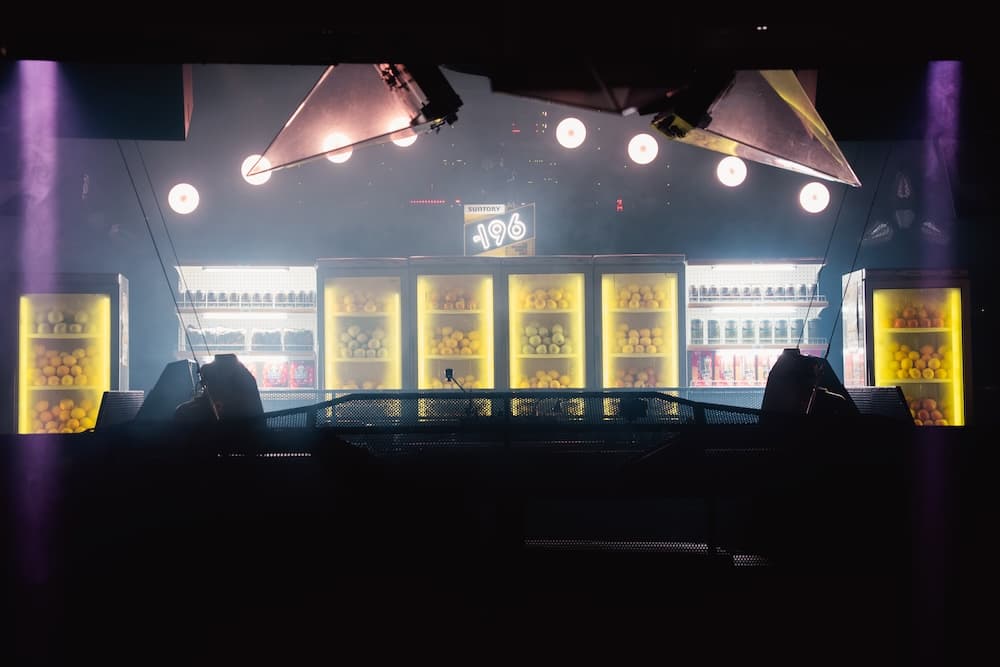
A konbini (Japanese convenience store) fits the product perfectly: -196 is a Japanese RTD (ready-to-drink), which is exactly what you'd grab from a konbini fridge. The brand didn't need a slogan. The room explained the product.
Fluorescent aisles, fridges and a photo booth give people something instantly recognisable but out of place in a nightclub. That tension between familiar and unexpected is what makes people pull out their phones.
02
Scarcity did the heavy lifting
Making tickets free removes the reason to say no. Making them limited adds urgency. Tickets reportedly went in under five minutes, and a queue of around 500 people stayed until closing.
A long queue is a signal in itself: to everyone walking past, and to everyone scrolling past the clips, it says ‘this is worth wanting’.
03
Culture partners, not just media
The brand used music culture channels (LINES, Whatslively, Mixmag ANZ (Australia and New Zealand)) and a DJ set from Club Angel. That puts the brand inside a scene rather than advertising at it.
Watch out: one-night events reach relatively few people directly. The real measure is how far the content travels afterwards. The ‘hundreds of clips’ reported are the start of that story, not the end.
Read the original reporting
- -196 turns a Sydney nightclub into a Tokyo konbini for one night via noisy and PHD ↗
Campaign Brief · 30 Sept 2026
The theory bit
The academic ideas that explain what's going on, with the full reference for your assignments.
Scarcity & social proof
People value things more when they're limited (scarcity) and look to what others are doing to decide what's worth doing (social proof).
Here: 750 free tickets for 5,000 registrants is textbook scarcity, and the visible queue adds social proof.
Cialdini, R. B. (1984). Influence: The Psychology of Persuasion. William Morrow.
STEPPS: why things catch on
Six drivers of sharing: Social currency, Triggers, Emotion, Public, Practical value and Stories. Content that makes people look good or is highly visible spreads further.
Here: It hits Social currency (you were there), Public (it's filmed and posted) and Triggers (every konbini fridge now reminds people of it).
Berger, J. (2013). Contagious: Why Things Catch On. Simon & Schuster.
The experience economy
As products become commodities, value shifts to memorable experiences. Staged, immersive experiences create stronger memories and willingness to pay.
Here: It stages an experience rather than a product sample, which makes it memorable.
Pine, B. J. & Gilmore, J. H. (1998). Welcome to the Experience Economy. Harvard Business Review, 76(4).
Over to you
No right answers here. These are to get you thinking. Jot your ideas down or chat them through.
- 1
Why do you think the brand chose free tickets instead of selling them?
Need a nudge?
Think about the trade-off between revenue and demand signals.
- 2
Only 750 people got in. So who was the campaign really for?
Need a nudge?
Consider the people who saw the clips the next day.
- 3
What would you measure to decide whether this was worth the money?
Need a nudge?
Go beyond attendance: reach of clips, search, sales in the area…
Optional · about 10 minutes
Your mini task
In 60–120 words: plan a one-night activation for a product of your choice using the same mechanic. Name the set, explain how scarcity works in your plan, and say how the content will spread after the night.