← Back to Your Brief
The Breakdown
Levi's · Let's Get Fuzzy
Levi's brought back 1990s claymation to prove a human made it, not AI
At a moment when AI-generated holiday ads are everywhere, Levi's went the other way, reviving the hand-built claymation style from its very first commercial and making the slow, visible labour itself the point.
4 min readOur analysis and study notes, not news reporting
The TL;DR (too long; didn't read)
- Levi's launched 'Let's Get Fuzzy', a one-minute holiday ad built entirely with hand-built clay figures and sets, a callback to the brand's 1995 'Clayman' ad, its first-ever global commercial.
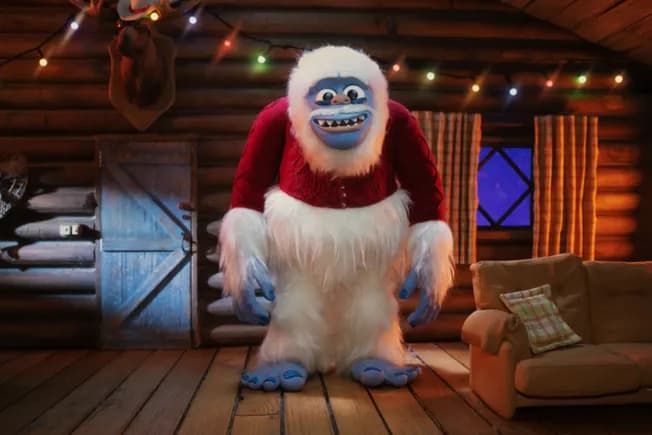
- In the film, a yeti named Gus tries to break into a cabin during a holiday gathering, then stops once a red sweater styled on Levi's holiday collection fits him and he joins the party; Levi's says filming took four hours of work for every second of animation and that no AI was used.
- The campaign launched two days after Halloween and runs across digital, social and retail, arriving just after a back-to-school campaign that CEO Michelle Gass said underperformed, with no figures yet published for 'Let's Get Fuzzy' itself.
01
The production method is the pitch
Most brands treat animation style as a background choice; Levi's is making the fact that it's hand-built clay, not AI-generated or CGI, part of the story it's telling about the ad.
Naming the exact production time, four hours of work per second of animation, turns an abstract 'we made this by hand' claim into something that sounds measurable and real.
Read the original reporting
- Levi's claymation holiday campaign celebrates handmade craft amid AI bloat ↗
Marketing Dive · 3 Nov 2026